By Ellen L Gilmer
The exemplary concert entitled “Between Bellini & Chopin,” featuring two highly accomplished and globally acclaimed performing artists, Dominika Zamara, soprano, and Clipper Erickson, pianist, brought the genius of pure brilliance to the Italian Cultural Institute in New York. On the evening of April 21st, 2036, the sheer beauty and poetic romanticism of springtime shared the concert stage with the cadence of dynamic strength and incorrigible loyalty. Intimate love songs joined with ardent Polish nationalism, as the velvet-smooth, seamless arc and flow of bel canto mingled with precision-measured marching rhythms.
This celebrated performance was founded upon the close friendship and strong artistic affinities of Vincenzo Bellini and Fryderyk Chopin, two emminent composer-geniuses of the classical music and yopera world.
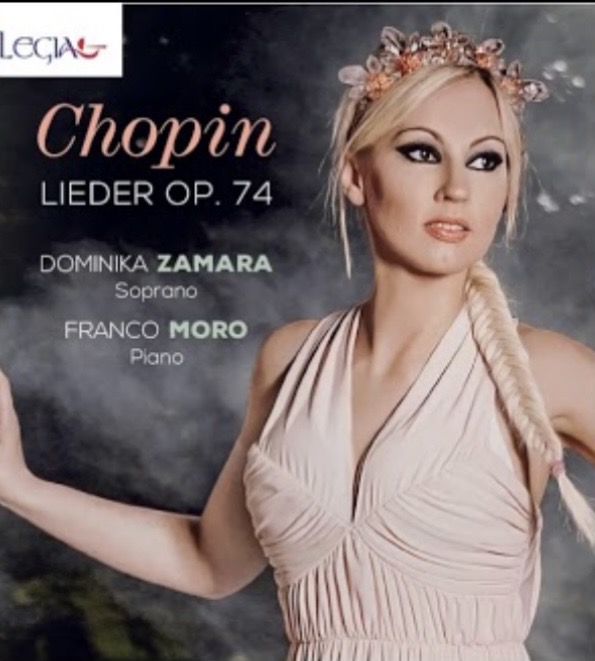
During this superb concert, Zamara performed nine of the art songs included in Chopin’s Lieder Op. 74. The velvet-smooth fluidity of her bel canto phrasing combined with her astute vocal technique and command were at once highly engaging, elating and admirable. The virtuosity and use of music dynamics displayed by the soprano and acclaimed pianist, Clipper Erickson who accompanied her, enthralled the audience with a vivid revelation of the wide range of emotions inherent in these songs. From pianissimo to fortissimo, the varied levels of vocal and instrumental delivery were pure, mesmerizing and exquisite artistry.
Ms. Zamara’s clear diction and command of rubato were admirable. In addition, she and Mr. Erickson partnered voice and piano with sheer beauty and expertise, conveying the complete emotional spectrum and value of each song. Together, they achieved and even surpassed, the ultimate goal of artfully balancing colorations of bright optimism and deep despair in this brilliant concert performance.

Exploring Songs Performed from Chopin’s Lieder Op. 74
• Pierścień (L’anello) – No. 14: (The Ring, 1836), Text by Stefan Witwicki. A brief, engaging remembrance of a symbol of love in strophic structure, with the same music form repeated for each verse.
• Smutna rzeka ( Fiume triste) – No. 3: (The Sad River / Troubled Waters, 1831), Text by Stefan Witwicki. This serious ballad describes a downhearted soul infused with dark melancholy as revealed by the text and streaming phrases of piano motifs.
• Piosnka litewska (Canto lituano) – No. 16: (Lithuanian Song, 1831), Ludwik Osinski: The gentle melody line of this song vividly recreates the true essence, qualities and subjects of Baltic folk tales and traditions.
• Życzenie (Desiderio) – No.1: (The Wish / A Young Girl’s Wish, 1829), Text by Stefan Witwicki: This joyful art song is known for the lightness and bright color of its piano refrains. Set to poetry by Stefan Witwicki, this energetic piece dances to a mazurka rhythm.
• Nie ma czego trzeba (Vorrei ciò che non ho) – No. 13: (I Want What I Have Not / Sorrow, 1836), Text by Bohan Zaleski. An Elegy in the style and rhythm of a march, this song conveys quiet, deep, sad hopelessness.
• Wiosna (Primavera) (Spring,1830). – No. 2: Text by Stefan Witwicki. This vivid depiction of nature in song offers radiant, fluid accompaniment. Chopin transcribed this music for piano as his well-known piece, (Andantino in G minor).
• Dwojaki koniec (Doppia fine) – No. 11: (The Double End / Two Corpses, 1845), Text by Bohdan Zaleski. This narrative art song compares different fates and deaths.
• Posel (Il messaggero) – No. 7: (The Messenger, 1831), Text by Stefan Witwicki. Written and performed with a galloping pace, this piece is propelled by the narrative of a messenger speeding toward a destination.
• Dumka (Reverie) – No. 19: (also catalogued as KK. IVb/9), Text by Bohdan Zaleski. This art song composed for voice and piano has strong qualities of Slavic folk music. This short, reflective piece expresses with varying shades of melancholy, deep sorrow, sadness, and vital song never before sung.
Inherent Value and Power of Chopin’s Art Songs
Chopin became known and celebrated as “poet of the piano. He created approximately 250 acclaimed compositions, including sonatas, études, nocturnes and concertos. While his art songs, as miniature works, are still less widely known and less often performed, they are given praise by scholars.
The Exquisite Bel Canto of Bellini Chamber Arias
Musicologists herald these smaller, yet brilliant gems for creating an equal sharing of spotlight and value for piano and voice. Together, these two highly acclaimed instruments embrace delicate beauty and pure, enduring power in their immediate l delivery and lasting effect, similar to that of his greatest, best-known works.
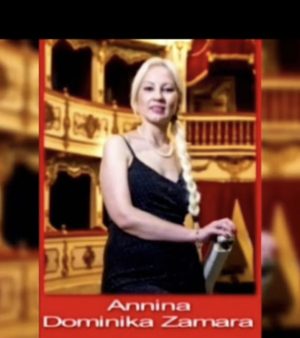
Continuing her superb performance after the Chopin Lieder Op. 74, Dominika thrilled her audience further with the following chamber Arias by Vincenzo Bellini:
• La Farfalletta (The Little Butterfly): This alluring Italian art song was composed by young Vincenzo Bellini when he was just 12 years old and at home in Catania, Sicily. It focuses on the singer attempting to capture a butterfly as a treasured gift for her beloved. The song’s gently springing vocal line is kept aloft by a lightweight, buoyant piano accompaniment.
• Ma rendi pur contento: This is the last song in Bellini’s collection, Composizioni da Camera, consisting of fifteen chamber compositions. The text was written by the well-known Italian poet /librettist, Pietro Metastasio and is an excerpt from the libretto Ipermestra. The performer reveals the fact that a lover’s true happiness and contentment is more important than one’s own.
• Vaga luna, che inargenti: A famed chamber arietta, this piece is a Bellini composition with an Italian text that is anonymous. The bel canto arietta is actually a nocturne in which the singer speaks to the moon, requesting it to bring longing sighs and love to a distant lover. This piece was dedicated to Giulietta Pezzi. An Italian writer and journalist from Milan, she wrote poetry, novels and a five-act drama.
• Dolente immagine di Fille mia: This dramatic art song (aria da camera) by Bellini is included as the second song in his collection, Tre Ariette.The author of the text is anonymous. In this engaging piece, the poetic lyrics speak to the sad spirit or remembrance of a lost love, Phyllis (Fille /Fillide).
Additional Art Songs by Verdi and Tosti
• G. Verdi – Non t’accostare all’urna: This is the first song in the collection entitled, Sei romance (Six Romances) by Giuseppe Verdi. The lyrics are a well-recognized poem by Jacopo Vittorelli, an Arcadian Academy poet. The poem’s subject is a disapproving and grievous disdain for a deceitful mourner at a graveside.
• F. P. Tosti – Il Sogno: The music for this sweet, gentle song was composed by Francesco Paolo Tosti and based on a textual theme by Lorenzo Stecchetti. The song depicts a lover’s beautiful dream. The score’s harp part is simple and pleasing to play, introducing smooth arpeggios in kinetic 6/8 formations. Enchanting countermelodies haunt the leading melody.

Biographical Sketch of Dominika Zamara
Dominika Zamara, highly acclaimed soprano, has attained recognition and praise around the globe. Born in Wroclaw, Poland, she received her Master’s degree in opera at the University of Music in Wroclaw. Subsequently, she continued her studies at the Italian Musical Conservatory in Verona, Italy.
Throughout her international career, Dominika has performed in numerous concerts across Europe and in many worldwide locations, including venues in Europe, England, the United States, China, South Korea, Australia, Mexico and Argentina.
Upon being granted a scholarship from the State Conservatory, she enriched her education further by performing in masterclasses conducted by some of the most highly esteemed opera teachers in Italy. These esteemed operatic professionals include Alida Ferrarini, Bruno Pola and Enrico De Mori.
Dominika’s debut operatic performance was the principal part of Mimi in Puccini’s “La Boheme” in 2010, with Maestro De Mori as director.
Major events of her performing career as a celebrated soprano include the role of Dori in the opera by G. Coronaro, “Un Tramonto,” (Teatro Olimpico, Vicenza); Padua in “La Serva di Padova,” the contemporary opera; “The Creation,” oratorio by Haydn (Chicago); Mythos Opera Festival: the opera “Aida” by Verdi at the Ancient Theater of Taormina; the inauguration of the “InCanto Barocco” Festival (Sicily); Violetta from Verdi’s “La Traviata” (Italy) and Vivaldi’s “Gloria” (New York). Dominika joined the roster of the New York Composer Circle as an International Performing Artist in 2023.
The many renowned venues in which Dominika has performed include Carnegie Hall in New York; Atterbury theatre, Pretoria in South Africa; beatification of Cardinal Stefan Wyszyński broadcast worldwide in Warsaw; Mostra del Cinema and La Biennale di Venezia; Accademia del Teatro alla Scala di Milano; World Youth Day in Krakow (in the presence of the Pope); the Pontifical Institute of Sacred Music (Rome); Manuel Ponce Hall (Mexico City); and Avery Fisher Hall (now David Geffen Hall), Lincoln Center (NYC).
Throughout her career, Dominika has received numerous accolades and awards. These high honors include the Cartagine Prize of Rome; the Premio Internazionale Fontane di Roma (“Fountains of Rome”) Award (presented by the Vatican); the Kobiety Charyzmatycznej Prize (Warsaw); and the American Prize Award: Chamber Vocal Music, Soprano (United States).
In addition to her outstanding career as a Concert Artist, Dominika Zamara continues to fulfill the demanding and highly beneficial role of Cultural Ambassador. She successfully extends and unites the the aesthetics of the Fine Arts, Culture and Fashion in her added role of Brand Ambassador for the Mather Milani Cosmetic line (Italy). In her concerts, she features elegant attire by globally renowned designers: Rosy Garbo, Ela Piorun, and Marta Jane Alesani. Rosy Garbo, Ela Piorun, and Marta Jane Alesani. Acclaimed photographer Stefano Geardi’s photo of Dominika was awarded the silver medal in the advertising category at the famed “World’s Top 10 Black & White Competition.”
Dominika has a wide and unique repertoire that extends from Baroque to Contemporary music, with a focus on the works of Mozart along with bel canto and contemporary pieces. She sings in many languages, and her recent project of concert performances featuring the arias of Vincenzo Bellini and the art songs of Fryderyk Chopin are receiving highest levels of appreciation and praise. Since its initial inception in 2013, this project has enlightened and inspired audiences around the globe.
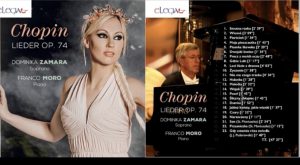
In 2018, Dominika recorded the entire cycle of Chopin’s Lieder in the original keys. The recording was made during her performance at the Accademia Teatro alla Scala in Milan, and the Academy library’s collections include a copy of the recording.
Dominika’s innate in-depth understanding of the Chopin Lieder Op 74 and the Art Songs of Bellini, Verdi, and Tosti combined with her excellent bel canto delivery captivated and enthralled her audience. The exquisite dynamic, volumetric colors and gently nuanced tones of her pure, rich soprano voice conveyed the full range of emotional impact and poetic intensities of meaning at the very heart and core of each work of ultimate genius and artistry that she performed.
The immense beauty, astute artistry and deep, insightful meaning of Dominika Zamara’s concert performance, “Between Bellini and Chopin” has formed a gift of great joy, emotional impact and uplifting enlightenment for all who have had the great fortune of experiencing it.


